
Watergate Didn’t Stop the Lawless Presidency
It taught the powerful how to come back stronger

A FEW DAYS after I graduated from high school, I was on the road from Batesville, Arkansas, to Washington, D.C. with my older brother Blair. I would be spending that summer working for Senator John L. McClellan (D-AR), while Blair would be working for Congressman Wilbur D. Mills (D-AR)—for whom he’d also worked the summer before, when he’d graduated from high school.

Obviously, we had political connections. Our father, William J. Arnold, was big in the Arkansas Democratic Party and a friend to both McClellan and Mills. Our dad lived and breathed Democratic politics, and, as I’ve written before, our whole family existed within his and our mother’s Yellow-Dog-Democrat incubator. From the time I was 3 years old, I was with my father standing the designated 100 feet from the polls handing out campaign cards for his candidates.
My dad had also been a fraternity brother and law-school friend of Senator McClellan’s son John McClellan Jr., with whom the senator was very close. Daddy (I’m a Southern girl) had also been there for the senator during the worst week of Senator McClellan’s life. That was in March of 1949, the month that his eldest son, Max—who’d been deployed in one of the first commando units of the critical 1943 WWII North Africa Campaign and had died there from spinal meningitis—was finally brought home for reburial beside his mother in South Arkansas. The night before Max’s reburial, John Jr. was in a devastating car wreck in Northwest Arkansas, but his injuries weren’t thought to be life-threatening. By the day after Max’s reburial, however, John Jr. too was dead. My father was a pallbearer at his funeral, and that act of quiet loyalty between the senator and my dad forged a bond of trust that was part of what eventually brought me to Washington to work for McClellan during the Watergate hearings.
NOTE: Anyone who knows politics understands how important loyalty is in the grander scheme of things, though Donald Trump has left the democratic sphere and imposed the loyalty of an autocrat on the people he has surrounded himself with—incompetent, inexperienced men and a few women who have made a mockery of their promise to protect the United States Constitution. Here’s the difference:
My Father’s Loyalty was built on shared sacrifice, tragedy, and institutional trust. It was an honorable code where men stood by one another to preserve families, communities, and the country. It honored the rule of law.
Trump’s Demand for Loyalty requires absolute subservience to a single person, overriding oath, duty, and the Constitution. It functions like a Mafia or an autocracy, replacing qualified public servants with “thugs” and sycophants whose only metric of success is shielding their leader from accountability.
To add to our family’s political clout, Wilbur Mills had given my father’s brother, Carl, his appointment to West Point, of which Carl was a graduate. Mills and my Uncle Carl were very good friends, and one of my cousins is named after him. By the time our father tragically died in 1969, Carl had become a powerful Washington lobbyist, and it was he who arranged these plum summer jobs for my brother and me. We weren’t just interns. We were actual staff who were paid for the months that we worked. Meanwhile, we would live with Uncle Carl and our Aunt Lila and their four children and maid during these educational (both exciting and horrifying) summer months.
Pretty much as soon as Blair and I arrived at Uncle Carl’s lovely white brick home in McLean, Virginia, Carl took us into his intimate study and told us that we would be privy to a lot of information before it was public, so we needed to keep our mouths shut. People on Capitol Hill would be trying to pry information out of us, he said, because that was the way Washington worked—and also because of who Carl was. This secrecy was drilled into us. And, in fact, we were in the know about a lot of valuable information that most of the Capitol Hill staffers were shut out of. Even though Carl has been dead for almost 30 years, he still would be furious at me for spilling the beans now. But I think I’m finally safe.

Power is the name of the game in Washington, and every person in every position on Capitol Hill is trying to claw his or her way up. But when I was there, politics was still a gentlemanly pursuit meaning no matter the disagreements between Democrats and Republicans, Congresspeople and Senators socialized together and treated one another civilly and with respect. They still had the best interests of the country at heart, as opposed to the GOP traitor/sycophants who occupy these positions now.
***
I WORKED ON Capitol Hill for Senator McClellan in both the summers of 1972 and 1973. The Watergate Hearings began on May 17th, 1973. One has to understand the feeling in the country at that time. The national mood was toxic, exhausted, and fractured after a decade of the Vietnam War, which had systematically stripped the presidency of its moral authority. The Pentagon Papers had already exposed a legacy of executive deception, proving administrations lied while 50,000 Americans died. Streets were filled with bitter protests—the culmination at Kent State with four students being killed and nine injured. When the Watergate hearings began, the public wasn’t just shocked; we were furious—especially young people. The scandal felt like the final betrayal—proof that a lawless executive branch was using police-state tactics to sabotage its enemies at home. Nixon and his bandits’ hypocrisy was in our faces.
NOTE: The Pentagon Papers was the nickname given to a top-secret, 7,000-page Department of Defense study that exposed decades of systematic government lies regarding the Vietnam War. Officially titled Report of the Office of the Secretary of Defense Vietnam Task Force, the study covered U.S. political and military involvement in Indochina from 1945 to 1967.
Commissioned by Secretary of Defense Robert McNamara in 1967, the report was leaked to The New York Times in 1971 by Daniel Ellsberg, a disillusioned military analyst who secretly photocopied the entire document.
Capitol Hill was a world unto itself—a private fiefdom of the players of United States politics on the highest level. The more seniority a congressman or senator had, the more power they wielded. When people used to talk about swimming with sharks in Hollywood, I would tell them it was nothing compared to Washington. And yet the Washington, D.C. of that era now sounds quaint compared to what Trump has done to destroy our democratic political process. Even the hidden agendas and skullduggery of the smoky backrooms sound like child’s play compared to Trump and his Mafia’s criminality.
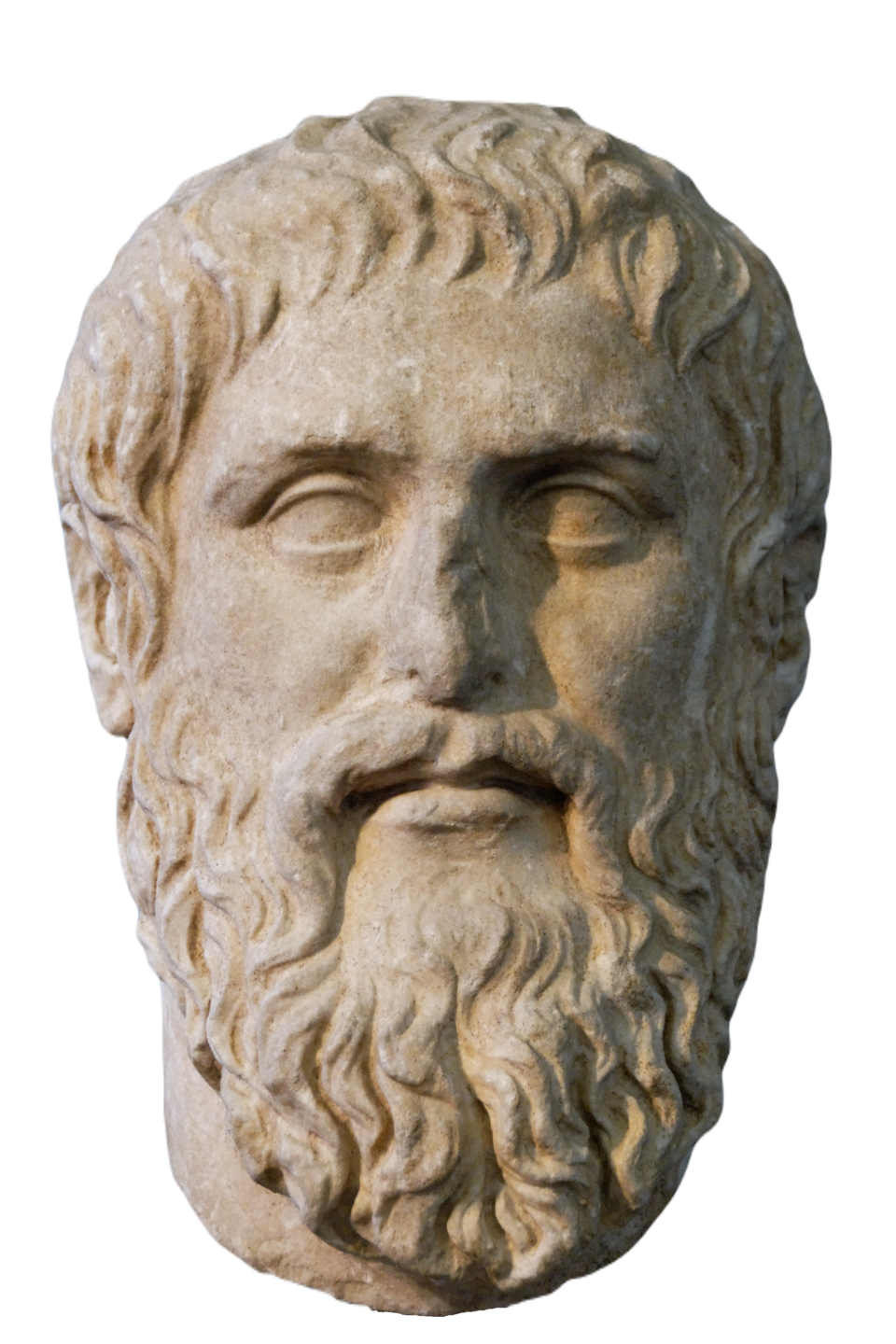
But centuries ago in The Republic, Plato warned of exactly this dark evolution: that unrestrained desire in a democracy eventually personifies itself in a mob of bandits who strip the city of its virtues and leave it bare. We’re now watching this in real time.
***
ON THE FIRST day of the hearings of what was officially named the Select Committee on Presidential Campaign Activities, the distinguished, French-inspired Caucus room in the Russell Senate Office Building was packed—including with celebrities like Norman Mailer and Dick Cavett. As expected, lines were soon drawn between Democrats and Republicans. Committee Chairman Senator Sam Ervin (D-NC) liked to say he was just an ol’ country lawyer though he was also a graduate of Harvard Law School and a former Associate Justice of the North Carolina Supreme Court, making him one of the Senate’s foremost constitutional scholars. He opened with a constitutional thunderclap …
“If the many allegations made to this date are true, then the burglars who broke into the headquarters of the Democratic National Committee at the Watergate were, in effect, breaking into the home of every citizen of the United States. And if these allegations prove true, what they were seeking to steal were not the jewels, money or other property of American citizens, but something much more valuable—their most precious heritage: the right to vote in a free election.”
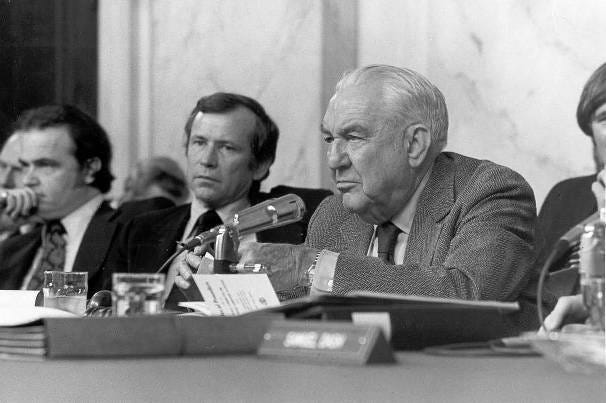

But the GOP trotted out their typical excuse to steal power from the people and give it to themselves—in this case, to the president. One of Nixon’s chief defenders, Senator Edward Gurney, argued that aggressively rocking the boat risked a catastrophic effect on the presidency itself. It is the age-old shield of political bandits: claiming that exposing their corruption will somehow destroy the state. Republican presidents have repeatedly weaponized executive privilege to evade accountability:
Nixon tried to hide behind executive privilege to keep the White House tapes from the public until the Supreme Court unanimously stopped him. (Imagine that now.)
Decades later, George W. Bush and Dick Cheney would revive and expand the same instinct, using secrecy, executive privilege, classified legal opinions, and national-security panic to shield the presidency from scrutiny.
And then came Trump, who did not merely invoke executive privilege as a defense. He treated accountability itself as illegitimate. Congressional subpoenas, criminal investigations, court rulings, election results, constitutional limits—all of it, in his mind, existed only to serve him, the Mad Would-Be-King Trump.
This is how republics decay. Not always in one dramatic collapse, but through precedent, permission, cowardice, and repetition. This seems to be the mission of the GOP.
After the first day of the Watergate hearings, Jules Witcover wrote in The Washington Post, “If you like to watch grass grow, you would have loved the opening yesterday of the Senate select committee’s hearings on the Watergate and related campaign misdeeds.” But on the second day, James W. McCord Jr.— Security Director for the Committee for the Re-Election of the President (CRP/CREEP) and a former CIA counterintelligence officer, and the electronics/security expert linked to the White House Plumbers who had been arrested inside Democratic National Committee headquarters at the Watergate complex—testified, blowing open the hearings and electrifying the Watergate TV drama and public consciousness, changing the course of history.
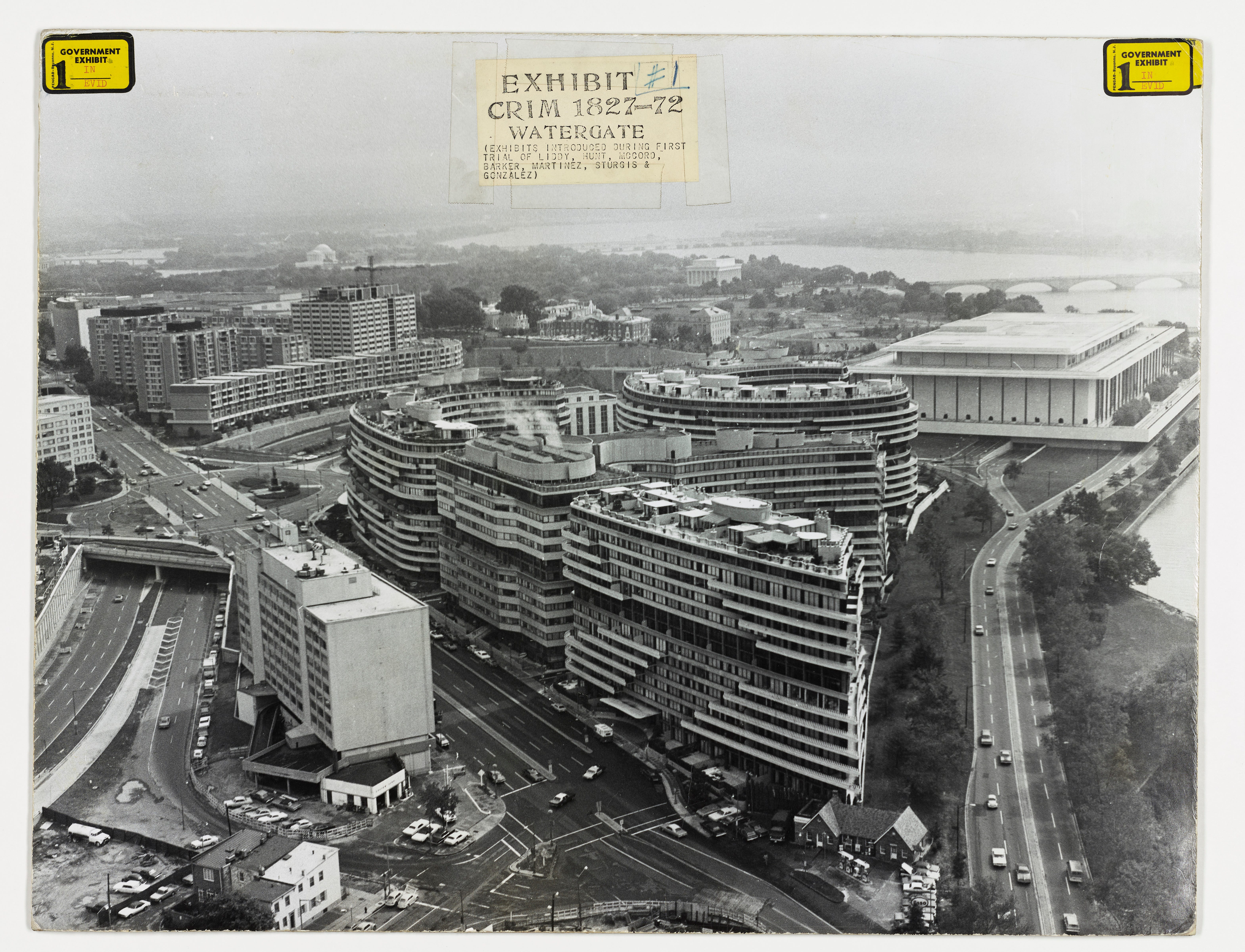
McCord decided not to be Nixon’s sacrificial lamb, and to save himself he ratted out and implicated the highest levels of the Nixon administration, shattering the White House’s wall of silence. His testimony pointed directly toward a wider cover-up and opened the door to the names that would soon define Watergate: former Attorney General John Mitchell, White House Counsel John Dean, Chief of Staff H.R. Haldeman, and Special Counsel Charles Colson. He also exposed Deputy Campaign Director Jeb Stuart Magruder, operation director G. Gordon Liddy, White House fixers John Caulfield and Anthony Ulasewicz, and even his own defense attorney, Gerald Alch, for orchestrating the cover-up.
The hearings soon transformed into a monumental, high-stakes battle for democracy, with lines quickly drawn between Democrats and Republicans. For his services as a cooperating witness for federal prosecutors and the Senate Watergate Committee, McCord’s sentence—potentially up to 45 years—was reduced to four months.
***
DO UNIVERSAL LAWS change throughout the ages? They are cosmically embedded in our collective consciousness. Plato understood that tyranny does not arrive announcing itself as tyranny. It comes dressed as protection, promising order. It comes calling to the wounded, the resentful, and the frightened to flatter and entrap them. In The Republic, Plato warns that the “protector” of the people can become the very wolf who devours them. The tyrant rises by claiming enemies everywhere, stirring up fear, attacking those who challenge him, and persuading the people that only he can save them. That was the danger Watergate exposed. Nixon had not merely broken laws; he had tried to turn the machinery of government into his private weapon. And Trump has gone further than this with George W. Bush as a bridge in-between.
As I’ve written before, this is the crucial difference between then and now: In 1973, the machinery of democracy still worked. The courts worked. The press worked. Congress worked. Republicans still had enough loyalty to the Constitution to tell a president of their own party that he had gone too far. A three-man delegation of Republican congressional leaders—Senator Barry Goldwater, Senate Minority Leader Hugh Scott, and House Minority Leader John Rhodes—met with Richard Nixon in the Oval Office on August 7, 1974, to deliver the final blow to his presidency. To survive a Senate impeachment conviction, Nixon needed 34 votes. In his memoir, Goldwater, Barry Goldwater recalled telling Nixon that the support simply was not there in the Senate: “Mr. President, there are not more than fifteen senators for you, and I am not one of them.”
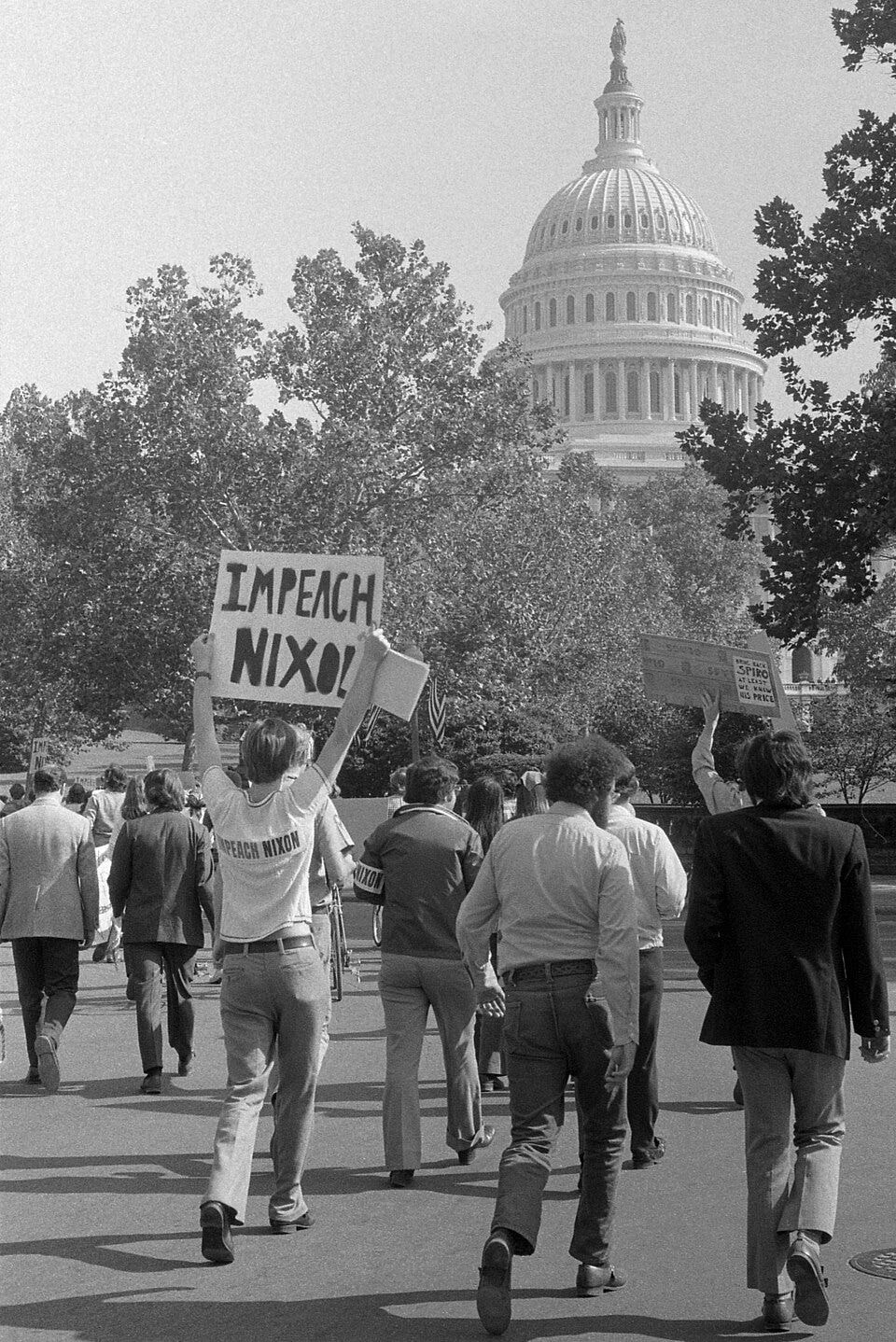
Boom! Nixon was forced out not because Democrats alone opposed him, but because the system still had men inside it who believed there was something higher than party and power.
For a brief moment after Nixon, America seemed to have learned the lesson. The presidency had limits. Congress had authority. The law mattered. No man, not even the president, was above the law. But power has a long memory, and the forces humiliated by Watergate did not disappear. Just like fascism in the U.S. before WWII, and the racism that’s being re-institutionalized, they regrouped. They learned not that Nixon had been wrong, but that he had been careless. The lesson they took from Watergate was not humility. It was how to use Executive Privilege and avoid getting caught.
That is the line that runs from Nixon to Reagan’s Iran-Contra scandal, from Iran-Contra to George W. Bush and Dick Cheney’s theory of almost unlimited executive power, and from Bush-Cheney to Donald Trump. Each stage pushed the country farther away from constitutional bedrock and closer to the lawless presidency Plato warned about: the leader who claims that his own will is the state.
Under George W. Bush, especially after September 11, the executive branch expanded its power under the language of emergency. The Bush administration claimed sweeping authority in the name of the Nazi-sounding “Homeland Security.” It embraced warrantless surveillance, black ops detention, torture called “enhanced interrogation,” and a theory of presidential power that treated Congress and the courts as obstacles rather than co-equal branches of government.
Bush was not Trump. He did not perform cruelty with Trump’s vulgar theatricality. He did not build a cult around his own personal grievances. But the Bush-Cheney years normalized something essential to Trumpism: the belief that a president could operate in a state of exception, shielded by secrecy, executive privilege, and national fear. That was the bridge. Nixon tried to hide the crime. Bush and Cheney built the legal architecture for impunity. Trump dispensed with shame altogether—and added a level of tackiness that none of us could imagine.
***
WHEN I WALKED into Senator McClellan’s office suite every morning, his beautiful, charming, and brilliant Executive Secretary Miss Margie (Nicholson) was quietly, cheerfully running the administrative show. From 1943 until Senator McClellan died in 1977, she directed that office with sophistication and fierce efficiency, managing the high-stakes correspondence, guarding the senator’s schedule and taking care of a zillion crucial details, keeping his world organized while the executive branch was systematically unraveling outside our doors. She always found sublime opportunities for me to experience whatever was happening on The Hill. She was dating one of the Watergate committee’s staff, and she would give me notes to take to him so I could go into the hearings and sit down and listen to them. The first time she gave me one, I said, “Miss Margie, what if they don’t let me in? She answered, “Honey, as long as you act like you know what you’re doing, you can get in anywhere.” I’ve never had better advice.

As I was finishing this piece, I read Margaret Sullivan’s recent column on why truth matters more than ever. It helped me see more clearly what I had been writing toward all along. Watergate was not only a crisis of presidential power; it was a crisis of truth. The hearings mattered because facts still had somewhere to go: into testimony, into newspapers, into courts, into Congress, and finally into the public conscience. That is what is so dangerous now. Trumpism does not merely lie. It seeks to destroy the very institutions that make truth visible.
The present moment in our country has let us all down. To understand today’s political crisis, we have to turn to Plato’s ancient warnings about how democracies die. His warning was that democracy without virtue, discipline, truth, or respect for law could become vulnerable to the tyrant. When every restraint is treated as oppression, when every appetite demands satisfaction, when the loudest flatterer becomes the people’s champion, freedom can curdle into its opposite.
That is the terrible joke of Trumpism. It screams “freedom” while demanding obedience. It waves flags while degrading the Constitution. It speaks in the language of patriotism while attacking the institutions that make self-government possible. And the past predicted our future.
Thank you for reading.
Pieces like this are made possible by the readers and listeners who support this newsletter. From the Inside Out is an entirely reader-supported publication, and your subscriptions—both free and paid—help sustain this work week after week, year after year.
If these missives have been meaningful to you, I hope you’ll consider becoming a paid subscriber, sharing this piece with someone who cares about the future of our democracy, or joining the conversation in the comments.
We are living through a dangerous chapter in American history, but we are not without memory, warning, or witness. That is why I keep writing.
If you’re already a paid subscriber, thank you. Your support means more than you know.
SECRET ENDING…
"Bush was not Trump". No, he wasn't. He did have something in common though. Here's my theory: Useful Idiots. It was an Eastern European concept during the Soviet Union's reign. I am sure this idea of a figurehead that is somewhat clueless, while the plotting goes on in the back rooms is historically common. This is what republicans have been putting into place or trying to do anyway. Reagan, G W Bush and trump are the party's successes...Successful idiots. Poppy Bush, Dole, McCain and Romney were too unuseful as idiots. Nixon and Agnew, (Straight up outlaws) showed them the way, Ford and the party protected them and the party basically decriminalized whatever "I Am Not A Crook" Nixon tried to do. So now some brainless fat pustule of a man coated in theatrical makeup was able to come along and throw the country under the bus. Reagan insisted that Government WAS the problem and now trump, the current useful idiot has taken the concept all the way to armageddon. And it is not republicans as much as it is the lure of wealth over human kindness.
Here are some books that lead me to this theory: In The Shadow Of Man- Goodall; American Nations- Woodard; Why They Call It Politics- Sherrill; People Of The Lie- Peck. The Watergate Hearings were something that both my wife and I were completely taken in...what a story. Sam Ervin, what a guy! I do think that you and I are on the same page with all of this.